Balcony and exterior elevated element inspection
← All Services

SB 721 / SB 326 Compliance

Balconies, walkways, decks, and stair landings are constantly exposed to weather — and the moisture damage that matters most is usually hidden inside the structure. California's SB 721 and SB 326 laws require owners and HOAs to have these exterior elevated elements inspected and documented on a set schedule. We make that simple: a clear inspection, a compliant photo-documented report, and — if anything needs work — a team that can repair it.

Why the law exists & who it covers +

SB 721 and SB 326 were enacted after a 2015 balcony collapse in Berkeley that was traced to concealed decay in wood framing. The intent is straightforward: make sure hidden deterioration is found and addressed on a regular schedule, before it becomes a safety problem.

They apply to buildings with three or more dwelling units that have exterior elevated elements — balconies, decks, porches, stairways, and walkways — which rely on wood or wood-based structural support and sit more than six feet above the ground.
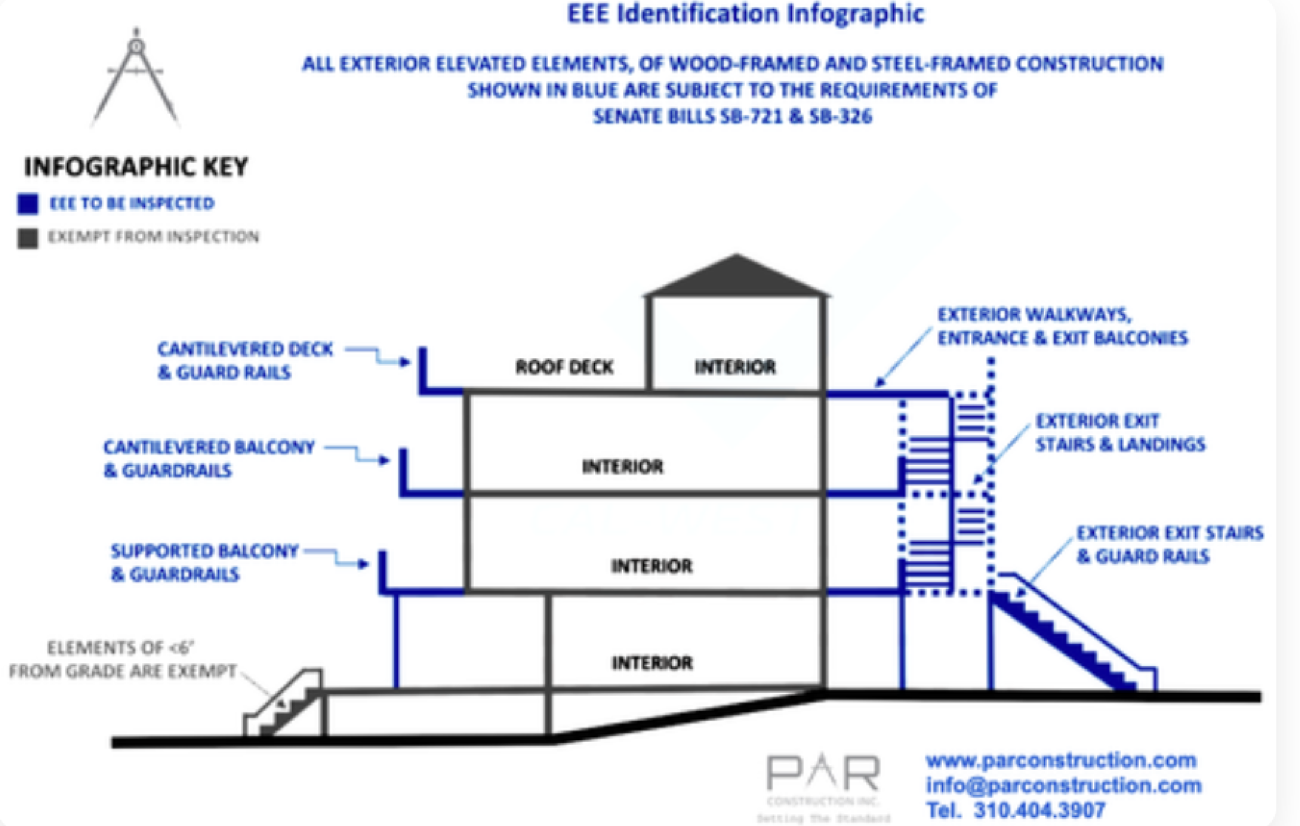
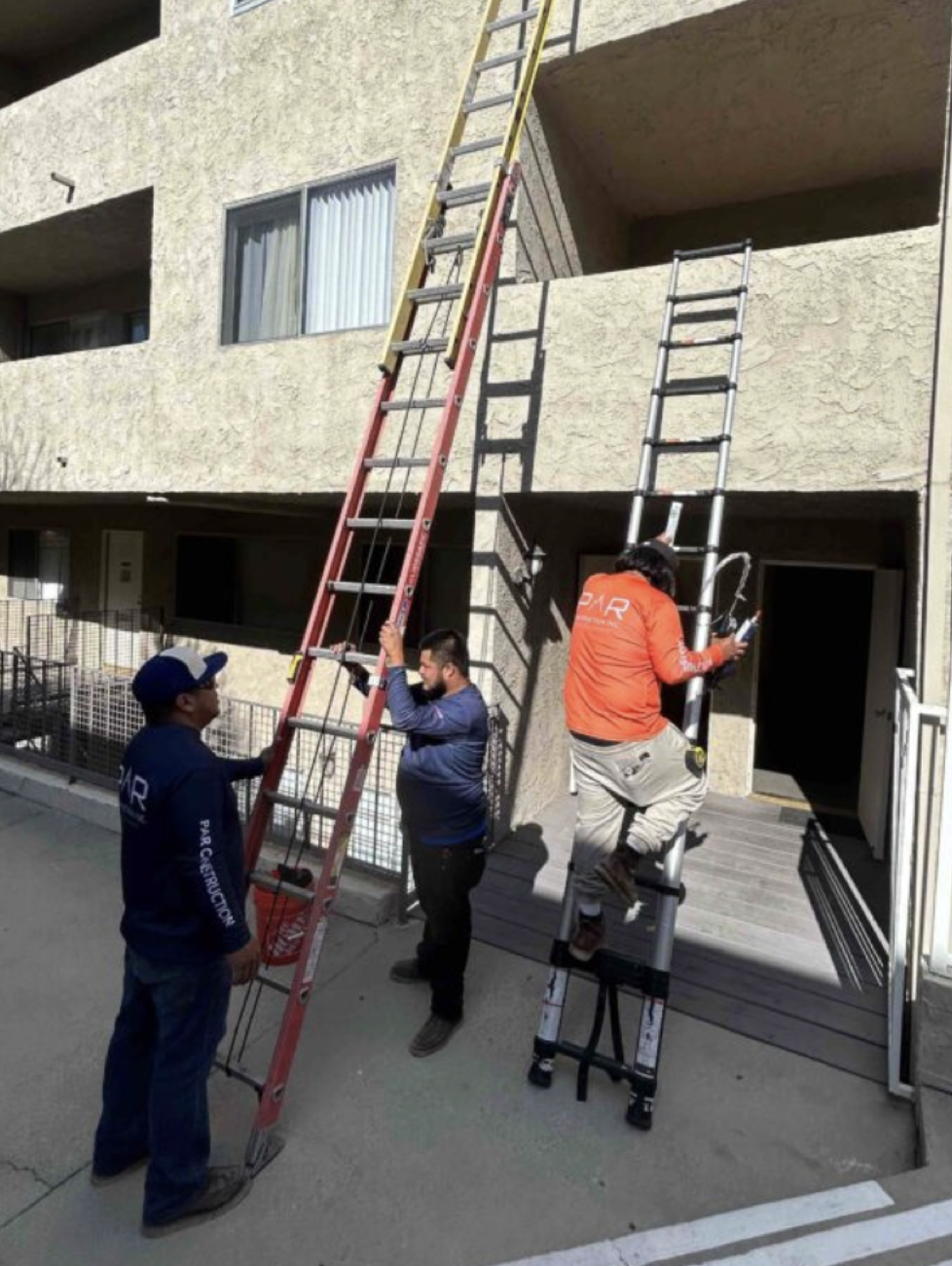
Diagram identifying the exterior elevated elements covered by SB 721 and SB 326
The exterior elevated elements (EEEs) covered by SB 721 & SB 326 — cantilevered balconies, walkways, and exterior stairs.
SB 721 — Apartment Owners +

SB 721 covers apartment communities. It requires an inspection of every Exterior Elevated Element, with a re-inspection every six years after that. If you own or manage an apartment building with three or more units and wood-framed balconies, decks, or walkways above six feet, it applies to you — and staying ahead of the schedule keeps you compliant and your residents safe.

SB 326 — Condos & HOAs +

SB 326 is the condominium and HOA version of the law. It requires inspection of the exterior elevated elements in common-interest developments, on a nine-year cycle that lines up with the association's reserve study. It falls to the HOA board or community association to keep it current — and buildings converting to condominiums must be inspected before the first close of escrow.

How we handle it — inspection to compliance +

We take the guesswork out of compliance. You get a fixed price up front, an inspection performed by people who understand the structure behind the finish, and a report that satisfies the law — with photo evidence for every element we flag.

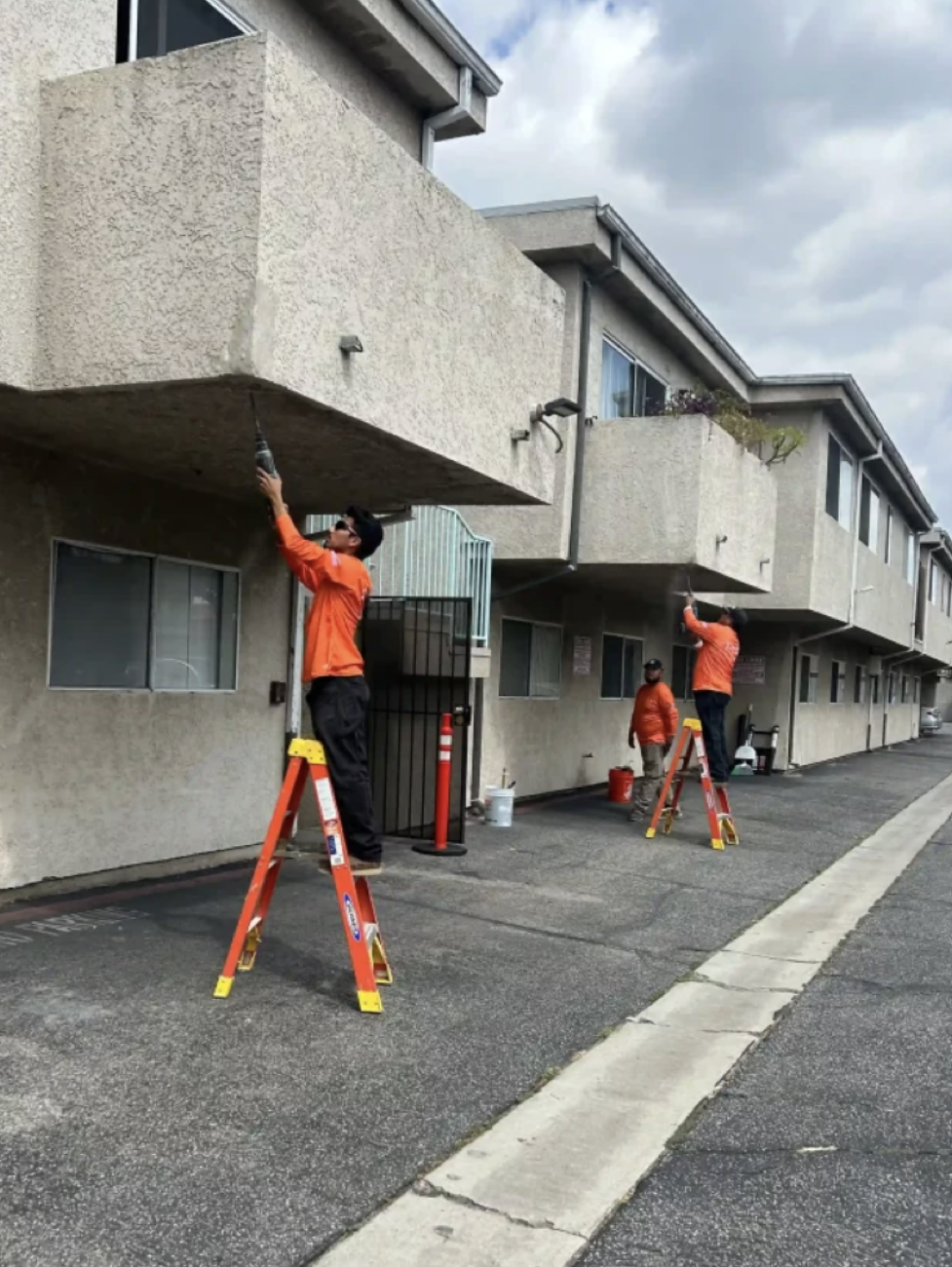
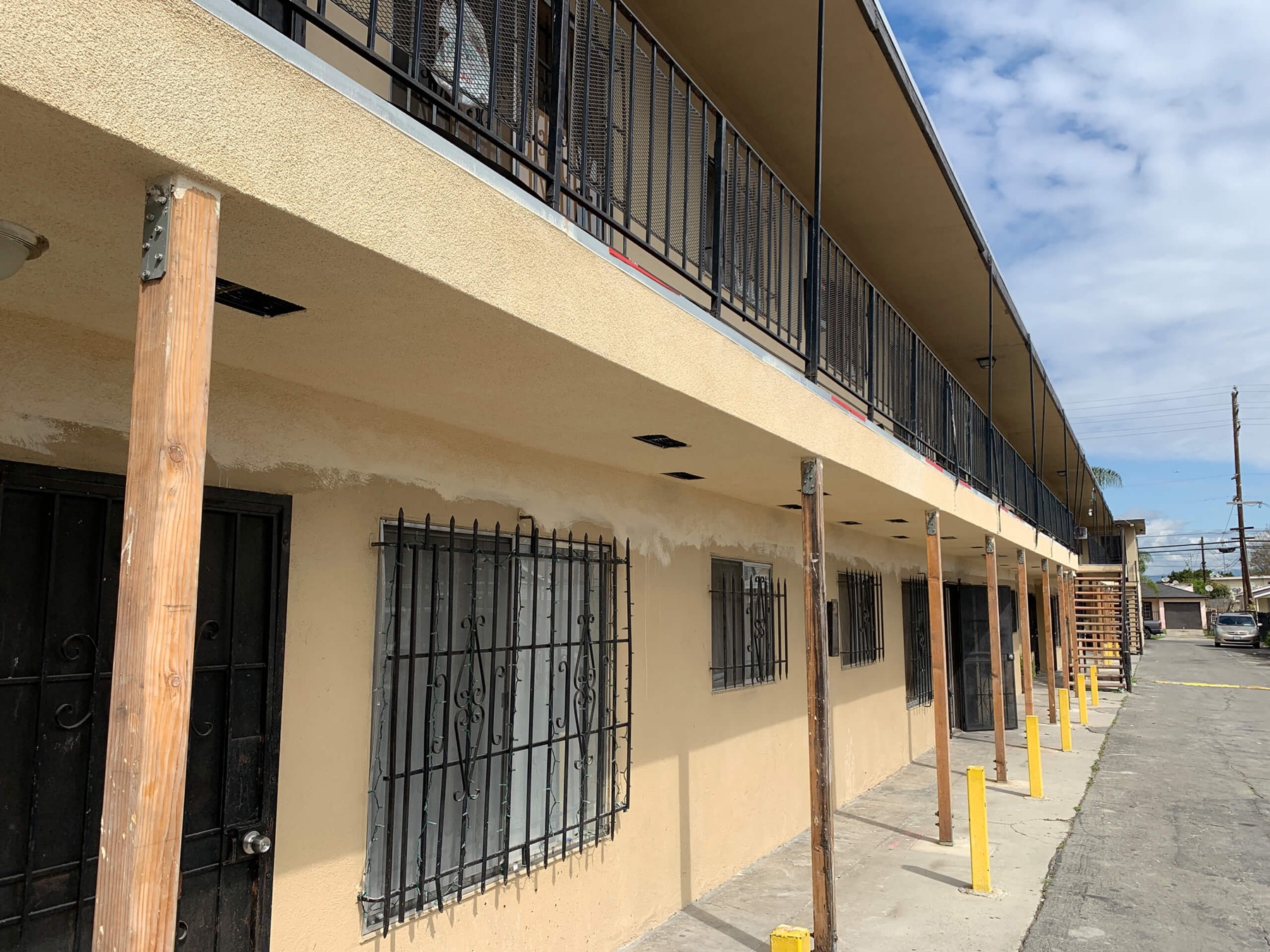
PAR Construction crew inspecting exterior elevated elements PAR Construction crew inspecting apartment balconies

What you get

  • Fixed-cost proposals — the price is set before we start, with no surprises.
  • Certified, photo-documented reporting — stamped and sealed where required.
  • A repair-ready team — if work is needed, we manage design, permitting, and construction end to end.

Because we're a licensed general contractor, you're never handed off from an inspector to a separate builder. It's one team and one point of contact, from the first inspection through certified repair.